Most people who want an outdoor kitchen never get one. Not because they can't picture it, but because they can't picture the process. Somebody has to draw it. Somebody has to pour a slab, frame block walls, run stone veneer, set a countertop, and cut in the appliances. There are permits to pull, inspections to schedule, and a contractor's calendar that fills up the moment the weather turns. By the time the quote comes back, the idea has quietly gone back in the drawer.
If that sounds familiar, this is the note for you. We built the Costa Outdoor Kitchen for exactly the person who doesn't know where to start — and our honest answer is that you can start a lot simpler than you've been told.
Start with how you actually cook
Forget the finished picture for a minute. Ask three questions. Where does the cooking happen — a gas grill, a Big Green Egg, a flat-top? Where do you set things down? And where do the tongs, platters, and charcoal live between uses? Almost every good outdoor kitchen is just an answer to those three: a cooking station, a landing zone on either side of it, and closed storage underneath.
Everything else — a sink, a beverage station, an island for guests to lean on — is a layer you can add now or next spring. Which is the whole point of building it in pieces.
It arrives built
Costa units come to you assembled. No flat-pack, no bag of cam locks, no Saturday lost to an instruction sheet. Each cabinet is a finished piece of solid Grade A teak under a Portland Grey ceramic top, with stainless hardware already hung. The only thing you put on is the handles. Set the units where you want them, line them up, attach the pulls, and you are cooking.
Modular, so it fits the space you have
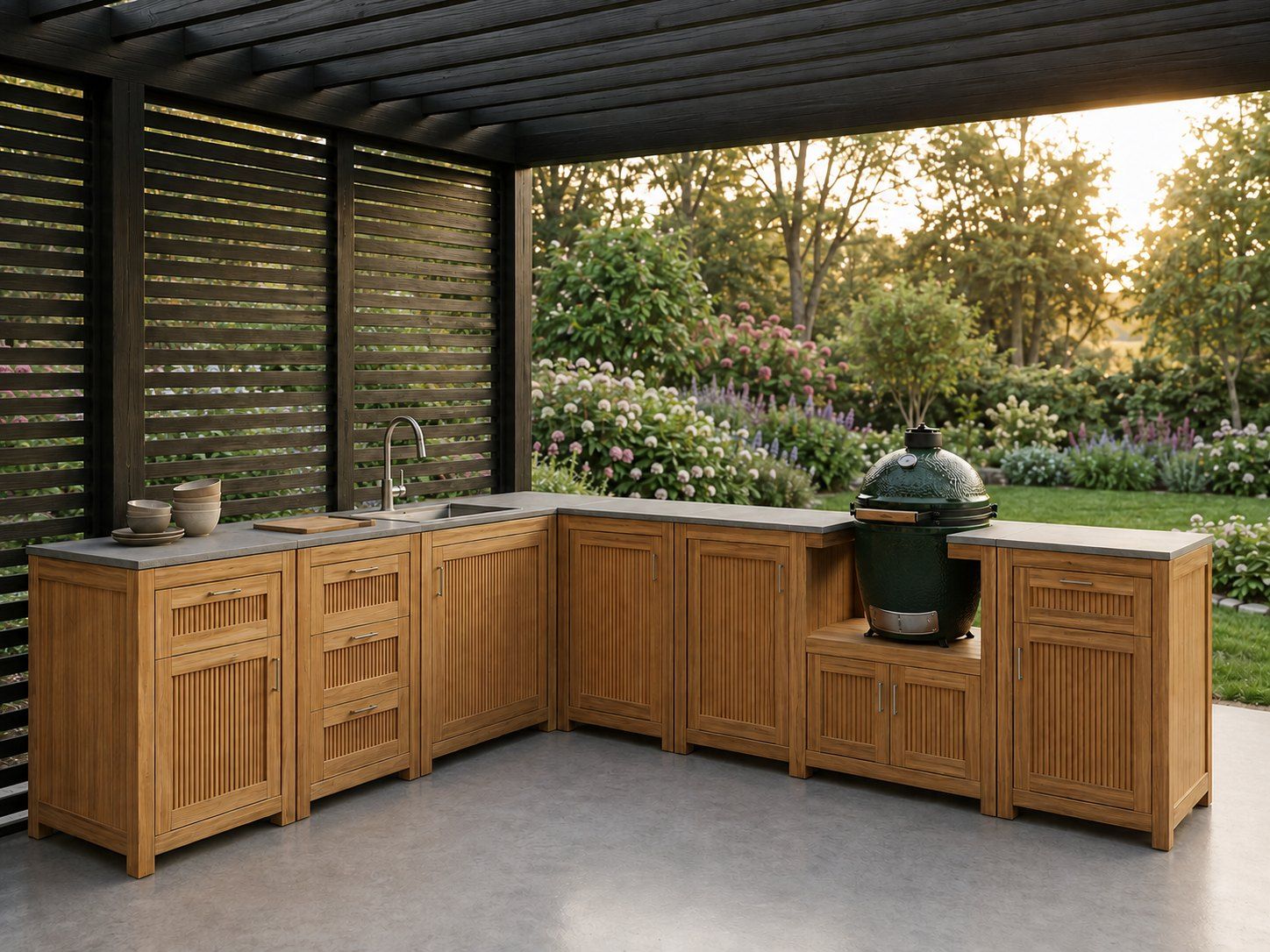
A built-in kitchen is designed around a slab. Costa is designed around your patio as it already exists. Every unit shares one counter height (35.5″) and one depth (23″), so any combination reads as a single continuous counter. Widths come in two sizes — 22″ and 47″, with a 31″ sink and a 35″ grill unit — and you combine them the way you'd combine sections of a sofa.
A few ways people put it together:
- The grill station. A Large Green Egg unit flanked by a 3-drawer unit and a single-door unit. About six and a half feet, and it covers most of what people cook outside.
- The full run. Add a 31″ undermount sink and a 47″ double-door unit for prep and storage.
- Turn the corner. The 90° corner unit takes the run into an L to tuck under a pergola or along two walls of a porch.
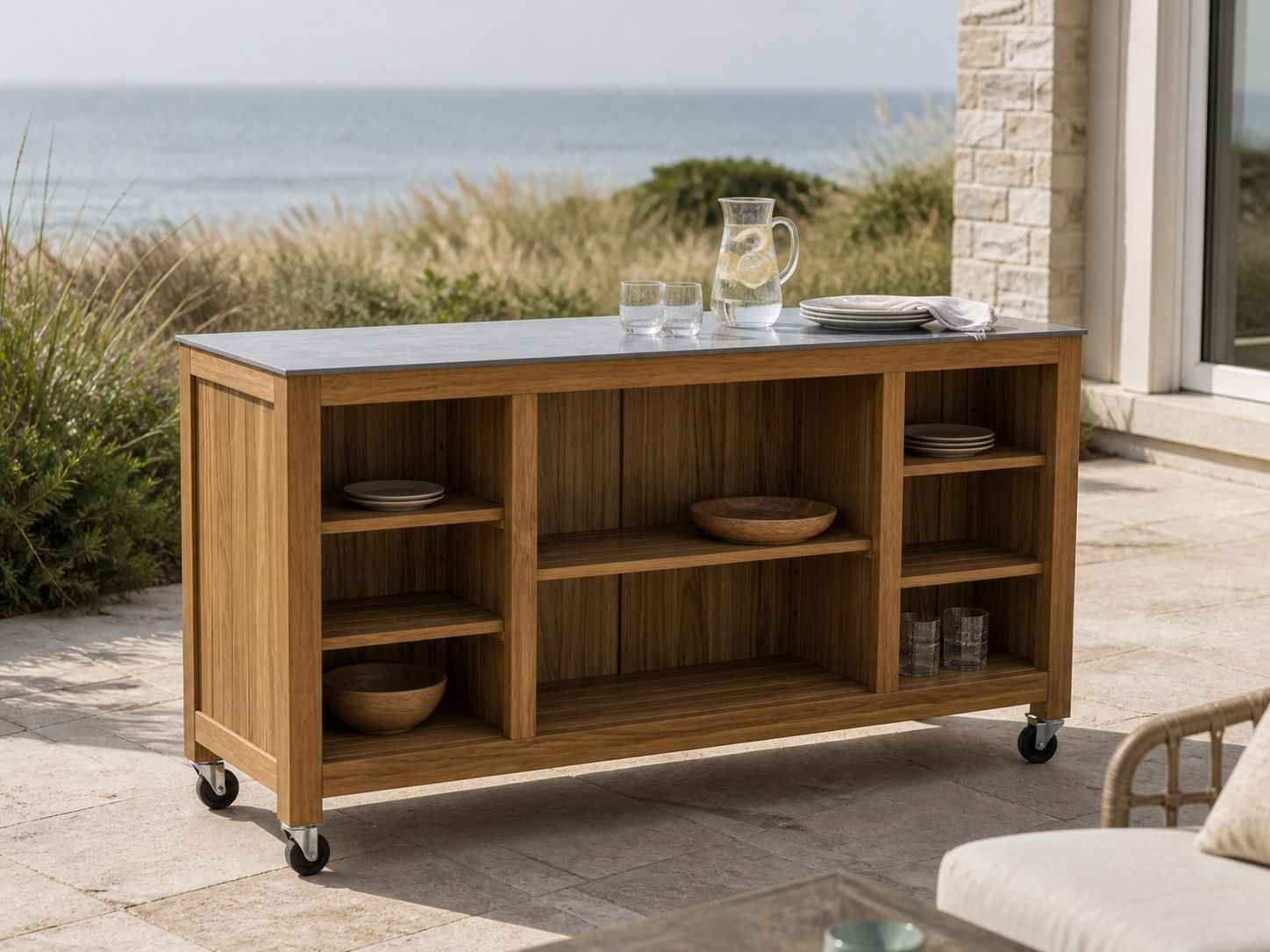
- No room for a kitchen at all? Start with the Beverage Cart or the Kitchen Island on Wheels and roll them where the evening is.
Moving house, or rethinking the patio in five years? The kitchen comes with you. Reconfigure it, add to it, take a unit to the pool house. Try that with a block wall.
Furniture, not construction
Because Costa units are freestanding furniture rather than a permanent structure, there's no footing to pour, no masonry, and no general contractor. In most places, that also means no building permit and no inspection — you are placing furniture on your patio, not adding to your house. (If you plumb the sink or run a new gas or electrical line, those connections follow your local code like any other, and it's always worth a glance at HOA rules. Plenty of people simply use the sink as an ice well.)
What that adds up to is weeks of lead time and a construction line item that simply disappear. You go from deciding to cooking in the time it takes for delivery.
Materials that live outside
An outdoor kitchen only earns its keep if you don't have to baby it. Costa cabinetry is the same solid Grade A teak we've used in our furniture since 1997 — dense, oily heartwood that shrugs off rain and sun. The Portland Grey ceramic tops take heat, citrus, and spilled wine without staining. The hardware is stainless throughout. Hose it down, wipe it off, cook again tomorrow. Leave the teak to silver, or give it an annual sealing to keep the honey tone — your choice. Our care guide covers both.
Finish the room
A kitchen is half the evening. The Costa Dining Table, Dining Chair, and High Bar Table are drawn in the same teak, so the place where you cook and the place where you eat look like they were always meant to be together.
Where to start, in three steps
- Measure the wall or patio edge you want to cook along, and note where your grill sits today.
- Pick your cooking station first, then add landing zones and storage on either side. Sketch it on paper — 22″ and 47″ blocks make it easy.
- Bring that sketch to a Royal Teak dealer, or request a quote online. We'll help you configure the run — a full kitchen or one rolling cart.
You don't need a contractor, a permit, or a plan drawn up by someone else. You need a patio, a grill, and an idea of how you like to cook. The rest arrives built.