Every autumn we get the same question from dealers and homeowners alike: what do I do with the furniture now? Cover it? Haul it into the garage? Leave it where it is? The short answer surprises people. For the frames, the right move is usually the least work. For the cushions, it depends on where you live.
Royal Teak pieces are designed to be left outside year-round, in nearly any climate. That is true of the teak, the hand-woven all-weather wicker, the powder-coated aluminum, and the rope. What follows is a plain-English guide to the three real choices — covering, storing, or simply using it all winter — and what each one asks of you.
First, decide what the season looks like where you live
Off-season means something different in Charleston than it does in Chicago. In much of the South, the patio never really closes: November is for oyster roasts, January is for coffee in the sun, and the furniture is in use more weeks than not. Further north, the deck may sit under snow for months and nobody will sit outside until spring.
Neither climate changes what the frames need. What it changes is how you handle cushions and how much attention you want to give the teak’s color. Start there, and the rest of the decisions get simple.
Option one: leave it out and keep using it
If you use your patio through the winter, the best care is the same care you give it in July. Teak is the rare wood that is happiest left alone. Outside and untreated, it silvers to a soft driftwood gray within four to twelve months and holds that color. That is not damage; it is what teak does.
The routine is short:
- Hose it down once a season. Plain water clears pollen, leaves, and dust. A soft brush helps in the corners.
- Tighten the hardware once a year. Wood moves with humidity. Run a screwdriver around exposed bolts on tables and snug them by hand. The hardware is stainless throughout, so this is about fit, not rust.
- Keep standing water off the tabletops. Pooled rain, planters, wet glasses, and damp cushions left on bare wood can leave rings and tannin streaks, especially on newer teak. Wipe up standing water and keep planters and wet cushions off the boards. Most marks fade as the teak silvers.
All-weather wicker needs even less. A hose aimed into the weave rinses out the dust, and that is most of it. When you move pieces around for a winter gathering, lift them with two people rather than dragging; pulling wicker across pavers or stone can cut the bottom strands.
Option two: cover it, the right way
Covers make sense for a long stretch of non-use, for a patio under trees that drop a lot of leaves and pollen, or simply if you want to pull the cover off in spring and find everything clean. The type of cover matters more than whether you use one.
- Use a breathable, vented furniture cover. It keeps debris off while letting moisture escape.
- Skip plastic tarps and non-breathable wraps. They trap moisture against the frame and cause more damage than the weather would. That goes for wicker as much as for teak.
- Never cover a wet piece. Let the furniture dry fully after rain or a rinse, then cover it.
A cover will not stop teak from silvering, and it does not need to. Its job is to keep the furniture clean, not to keep it indoors.
Option three: bring the cushions inside
Here is where climate makes the call. The frames can stay out; in seasonal climates, the cushions should come in from late autumn through spring.
Every Royal Teak cushion is manufactured in North Carolina and sewn with Sunbrella® solution-dyed acrylic over a quick-dry, open-cell foam core, so a rainy week is not a problem. A season of snow, freeze, and thaw is a different matter, and indoor storage is the simple answer. Before you put them away:
- Clean them. Blot any spills, then use Sunbrella’s method: a quarter cup of mild soap per gallon of lukewarm water, a sponge or very soft brush, a thorough rinse. For a deeper clean, the covers zip off and can be machine-washed cold on delicate. Always air dry.
- Make sure they are completely dry. Stored damp, any cushion invites mildew.
- Store them on edge. Pick a dry, ventilated space — a garage, basement, or unfinished attic — and stand cushions on their narrow edge. Do not stack them flat.
If you live where the patio stays open all winter, there is no need to store cushions at all. Bring them under a roof during a long rain if that is convenient, flip reversible cushions now and then for sun rotation, and keep wet cushions off bare teak. Our Cushion Library covers fabrics, construction, and reorders.

Honey or silver: the off-season decides
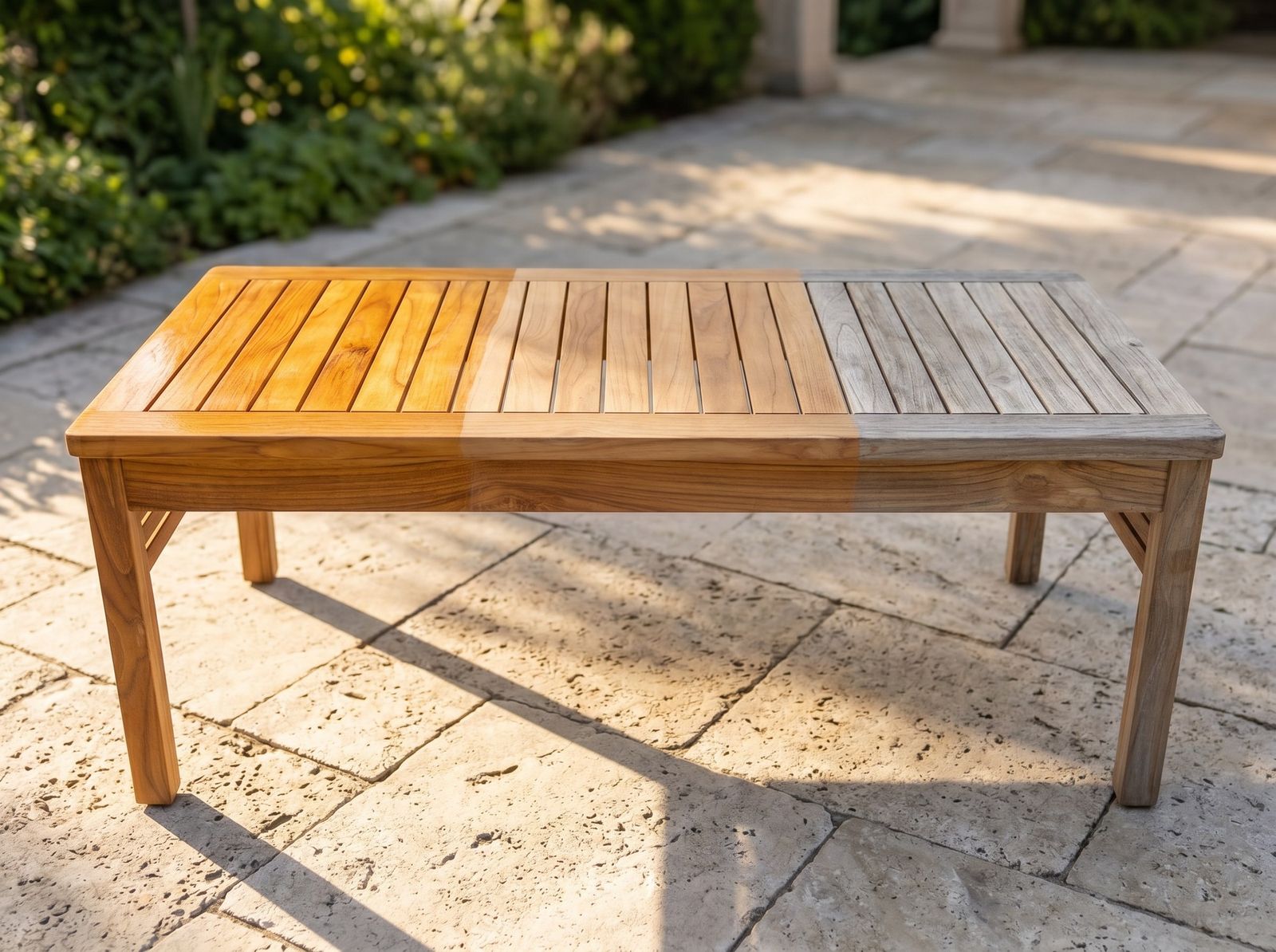
Winter is when most teak makes its choice for you. If you want the gray, do nothing; by spring it will be well on its way. If you prefer the original honey tone, there is no need to fight the weather all winter. Let it go, and give it one afternoon in spring:
- Apply a two-part teak cleaner to lift the gray. Rinse, and let the wood dry for 48 hours.
- Work two thin coats of sealer with the grain.
- Reapply once a year. That annual sealing is all it takes.
Two cautions. Do not use teak oil — it feeds mildew, darkens unpredictably, and does not protect. And do not sand the wood or power-wash it above 1,000 PSI to bring the color back; the cleaner does that job without taking wood with it. We carry Teak Cleaner and Teak Sealer, and our piece on letting teak silver walks through both paths.
The twenty-minute spring start-up
Whichever route you take through winter, spring looks the same. Hose everything down. Tighten the hardware. Clean and seal the teak if you want honey, or leave it silver. Bring the cushions back out. In most cases, that is twenty minutes of work, and the patio is open again.
The full routine for every material is in our care guide, and the materials themselves — Grade A teak heartwood, stainless hardware, all-weather wicker, Sunbrella® — are explained on our materials page.
Planning ahead
The off-season is also the quiet season, and a good time to plan the patio you want next spring. Teak deep seating like the Miami Collection and wicker like Boca are designed to live outside in every month of the year. See them in person at a Royal Teak dealer, or request a quote and we’ll connect you with the one nearest you.